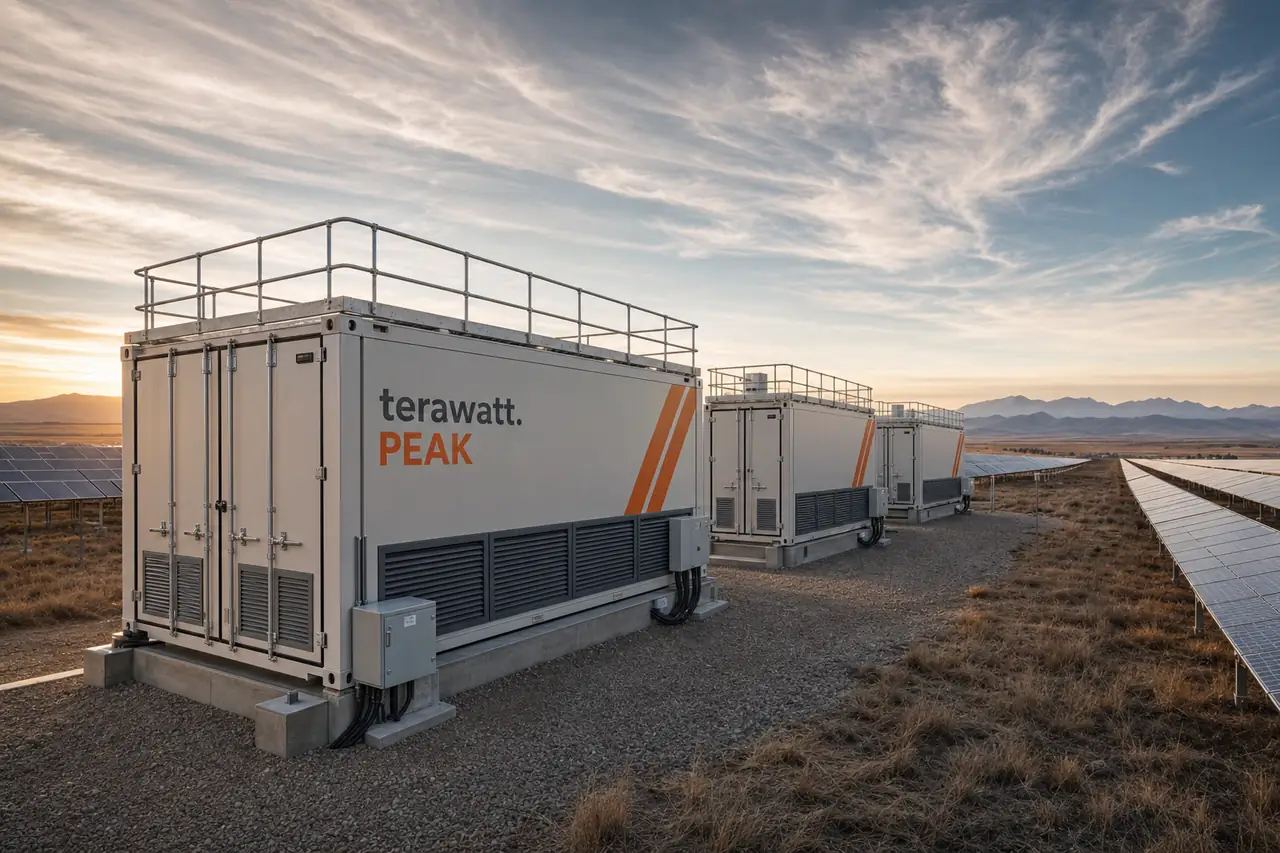
You're billed on your worst 30 minutes. We flatten them.
Battery storage that cuts the demand charge — the biggest, least-understood penalty on a commercial bill. Your demand charge is set by your single highest half-hour of draw in the month. Then you pay for it all month. A battery shaves that peak so you never get billed for it. Backup is a bonus. The money is in the peak.
The demand charge is the biggest line you've never looked at. Storage is how you cut it.
On a commercial bill, the notified maximum demand charge (NMD/kVA — what you pay for your peak draw, not your total use) can match or beat the energy charge. It's driven by short spikes, not total consumption. You can't cut it by using less overall. You cut it by never drawing the peak. That's what a battery does: charge in the quiet hours, discharge into the spikes.
One asset. Four lines on the bill it attacks.
No mode soup. Four levers, all aimed at cost — sized and stacked against your real load. Every one of them shows up in Rands on the next invoice.
NMD / kVA reduction
Shaves the peaks that drive the biggest fixed penalty on the bill — the notified maximum demand charge.
Peak shaving
Discharges into your spikes so you never draw the expensive peak from the grid in the first place.
Tariff arbitrage
Charge off-peak or from solar, discharge during the TOU (time-of-use) peak — bank the spread every day.
Power-factor correction
Cuts PF penalties — the charges you pay for drawing power inefficiently at the meter.
Backup through load-shedding is a benefit of having the battery — not the reason to buy it. The economics stand on a stable grid.
Watch the peak get cut.
A typical industrial day: jagged demand, with the bill set by the worst spike. The battery charges in the troughs and discharges into the peaks — so the line you're billed on drops to the flat cap. Same work done. Lower peak.
Indicative only — assumes a battery sized to shave a slice of your peak and arbitrage TOU energy. Demand charge is billed per kVA of notified maximum demand. Your real number comes from interval data, not a slider.
See your demand and TOU penalties — and what we'd cut.
Drop a bill. We read your NMD/kVA and TOU charges, flag exactly where the demand penalty lives, and model what storage removes. Free. About 30 seconds. No follow-up unless you ask. POPIA-compliant, processed in South Africa.
EnergyCloud finds the penalty. Peak removes it. EnergyCloud proves it's gone.
The bill audit surfaces the demand and TOU penalties. Peak is the hardware that removes them. Then EnergyCloud tracks the avoided penalty, month after month — so the saving is measured, not promised. Nobody else on the market closes this loop.
EnergyCloud reads the bill
The audit surfaces the demand (NMD/kVA) and TOU penalties hiding in your invoice — in Rands, on your real load.
Peak removes them
The battery, sized to your load, shaves the demand peak and banks the TOU spread — the hardware that does the cutting.
EnergyCloud tracks it
It measures the avoided penalty every month, so the saving is on a dashboard — not in a brochure. See EnergyCloud →
Demand down 41%. TOU peak down 38%.
A composite of typical engagements, not a single site. The saving comes from shaving the notified maximum demand and banking the TOU spread. Anchor: demand −41%, TOU peak −38%. CONFIRM real Peak figures or let stand as illustrative
A battery sized wrong is a very expensive paperweight.
Storage economics live or die on correct sizing against your real interval data. Oversize it and the payback collapses. Undersize it and you still clip into the peak. We size off real load data. One team designs and commissions. NERSA-registered, B-BBEE Level 2. EnergyCloud monitors dispatch so the saving stays real.
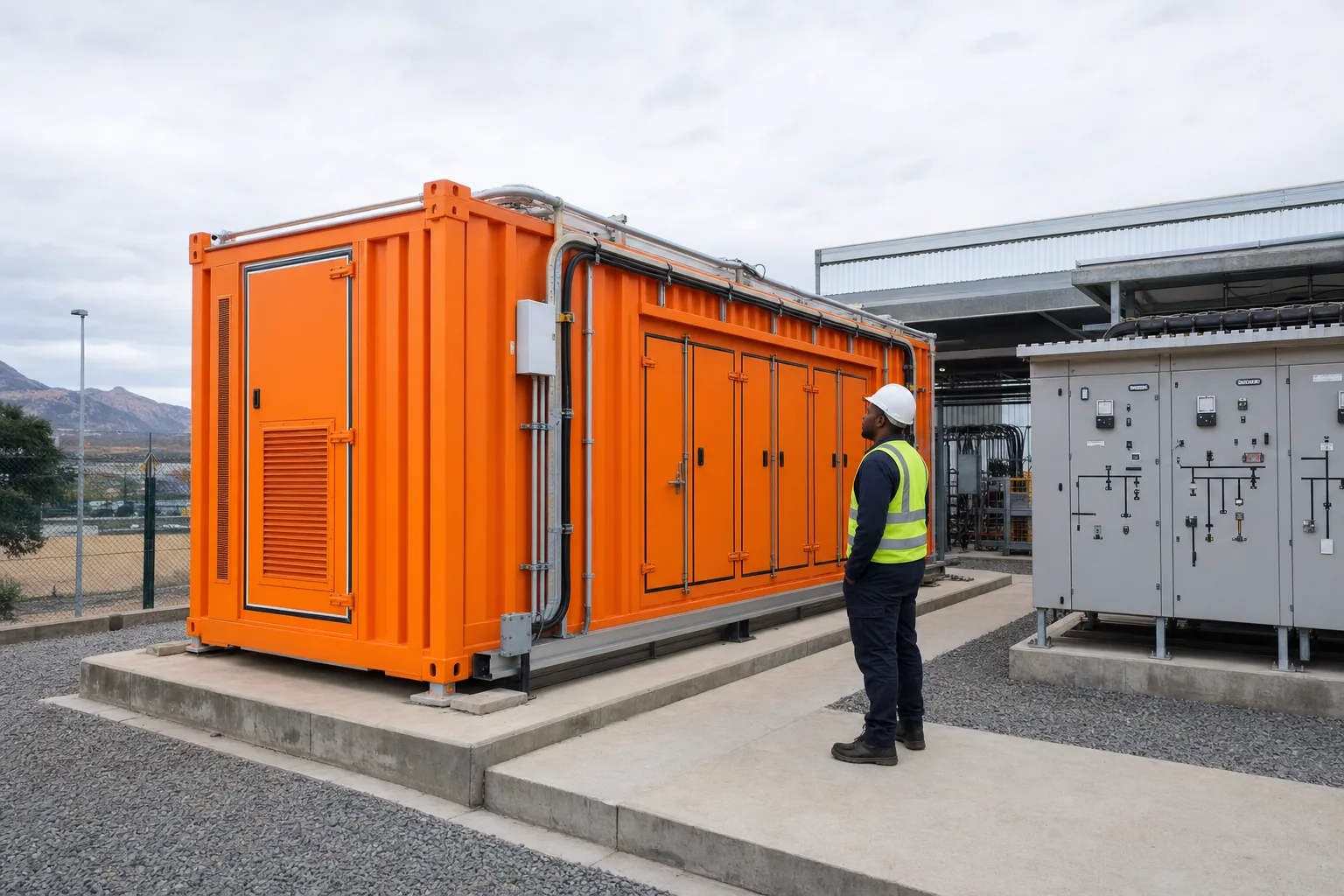
Sized off real interval data
We model against your actual half-hourly load — not a nameplate or a best-case brochure.
In-house engineering
One team designs, builds and commissions. The people who sized it answer the phone in year five.
LFP cells · 10-yr warranty CONFIRM
Lithium-iron-phosphate only — the safe, long-cycle chemistry. CONFIRM chemistry / warranty / cycle terms
Continuous dispatch monitoring
EnergyCloud watches every dispatch, so the peak stays shaved and drift is caught, not discovered.
NERSA-registered · Level 2
Compliant by default, B-BBEE Level 2, Durban-based — accountable for the asset over its life.
References under NDA
Real per-site numbers and contactable references, shared privately on request.
[ Customer quote — a consented quote from a facilities engineer or CFO about the demand-charge saving, the sizing, or the de-risk. TW-REF — add one real quote; highest-value element on the page ]
[ Name · Role · Organisation ]Spiky load. Heavy penalties.
If your peak draw is brief but the demand bill is permanent, you're paying for minutes you can shave. The spikier the load, the bigger the prize.
Motor-start spikes
Big machines pulling hard on start-up set the demand peak in seconds. The battery absorbs the inrush so the meter never sees it.
Compressor cycling
Refrigeration compressors cycle hard against the heat of the day. Storage flattens the cycling and holds temperature through the peak window.
Intermittent heavy draw
Batch plants draw in bursts — crushers, mixers, dryers. The peak is brief, the bill isn't. A battery bends it back down.
Brief peak, permanent bill
Wherever your highest half-hour sets a charge you pay all month, that peak is shaveable — and worth the analysis.
Stop paying for peaks you only hit for minutes.
Drop one recent bill and we'll show you, in Rands, what storage removes from your demand and TOU penalties. Free report, a one-business-day response, no sales pitch.